The Battle of Aljubarrota or "the shovel against the Castilians"
The Battle of Aljubarrota or "the shovel against the Castilians"
This illustration is from the six-volume work Recueil des croniques d'Engleterre by Jean de Wavrin, and it depicts the events of August 1384: the Battle of Aljubarrota between the Portuguese and Castilians.
Ferdinand I, the King of Portugal, did not have time to leave heirs, and his daughter married the Castilian monarch Juan I. Excellent grounds for claims to the throne, but there was a problem - João, Ferdinand's brother, was the illegitimate son of the previous king. Such situations were rarely resolved in the Middle Ages without bloodshed, what can you do.
As we have already said more than once in posts about the Hundred Years' War (which was in full swing at the time), the Iberian states were quite involved in the general politics of Western Europe. At the same time, strong relations had already formed between Portugal and England (which would play a role until the 20th century and would be very clearly manifested in the same Napoleonic Wars - and how many centuries would pass!). Castile, let me remind you, was very close to France, although they could not always be called true allies.
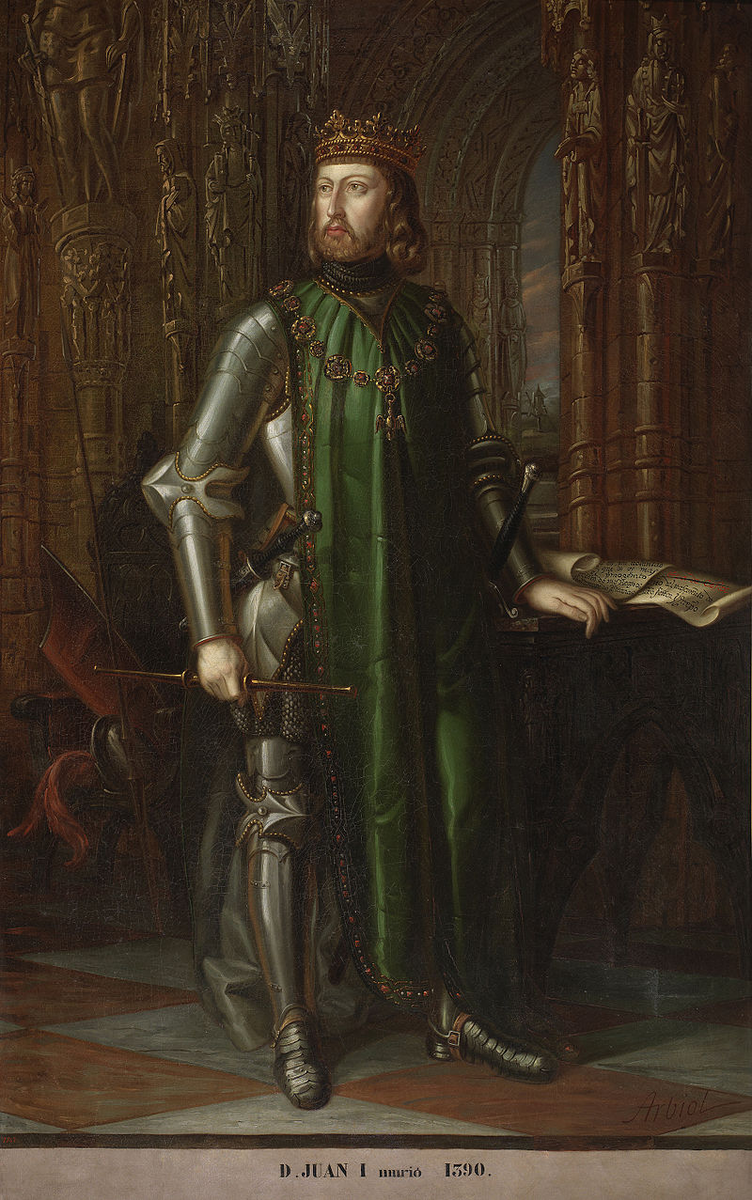
It is therefore not surprising that when Juan I invaded Portugal, he had French cavalry on his side - and the committee for the ceremonial reception, in addition to the troops of the future Juan the Great himself, also included English archers. The host side took up a position on a hill surrounded by small water obstacles.
Sounds familiar, doesn't it? The course of the battle will be similar to the notorious Crécy, but as I have said many times, the secret here is not in the longbows themselves. Alas, although the Castilians had an obvious numerical advantage (I deliberately do not give figures, since everything is very confusing and clearly exaggerated: only the very fact of the Spanish side's superiority is unambiguous), and most likely - a qualitative one, they did not manage to realize this.
Here, as in the more famous events of the Hundred Years' War, literally every possible mistake was made. And the people were driven into battle straight from the march, and there was no talk of any organization in the actions of the detachments on the Castilian side, and the maneuvers undertaken were quite strange (as far as we can judge them).
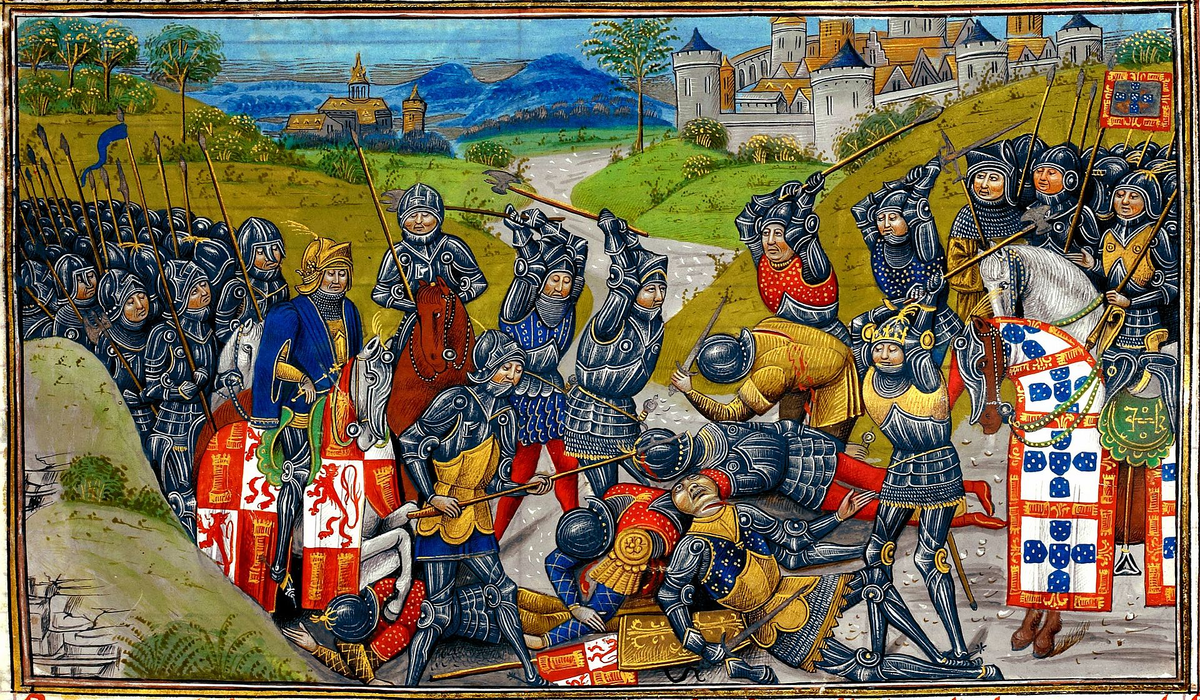
As a result, we have the familiar picture of heavy losses of the attackers from the English bows, and then - a complete confusion of battle formations, loss of morale and a disorganized retreat. During the pursuit, the home team inflicted even more terrible losses on the Castilians than in the battle itself: the list of fallen nobles is not as impressive as at Crecy, but still quite solid.
I will note, by the way, that the battle of Aljubarrota is not the first clash of this campaign: back in the spring at Atoleiros, the cavalry in the service of Castile also proved powerless against the Portuguese. And the matter here, again, is not in the miracles of archery, but in the mediocre management of the troops, whose commanders believed that the abundance of cavalry would compensate for any mistakes. Alas, in practice this was not so - as the "knightly" armies regularly had the opportunity to see for themselves long before the era of tercios with landsknechts.
The battle resulted not only in João I becoming king of Portugal, but also in the birth of the popular folk legend of the Baker of Aljubarrota: a local lady named Brites de Almeida who allegedly found seven Castilians in her house who had fled the battlefield. And killed them... with a shovel. It's a legend, of course, but a very significant one for Portuguese culture.